
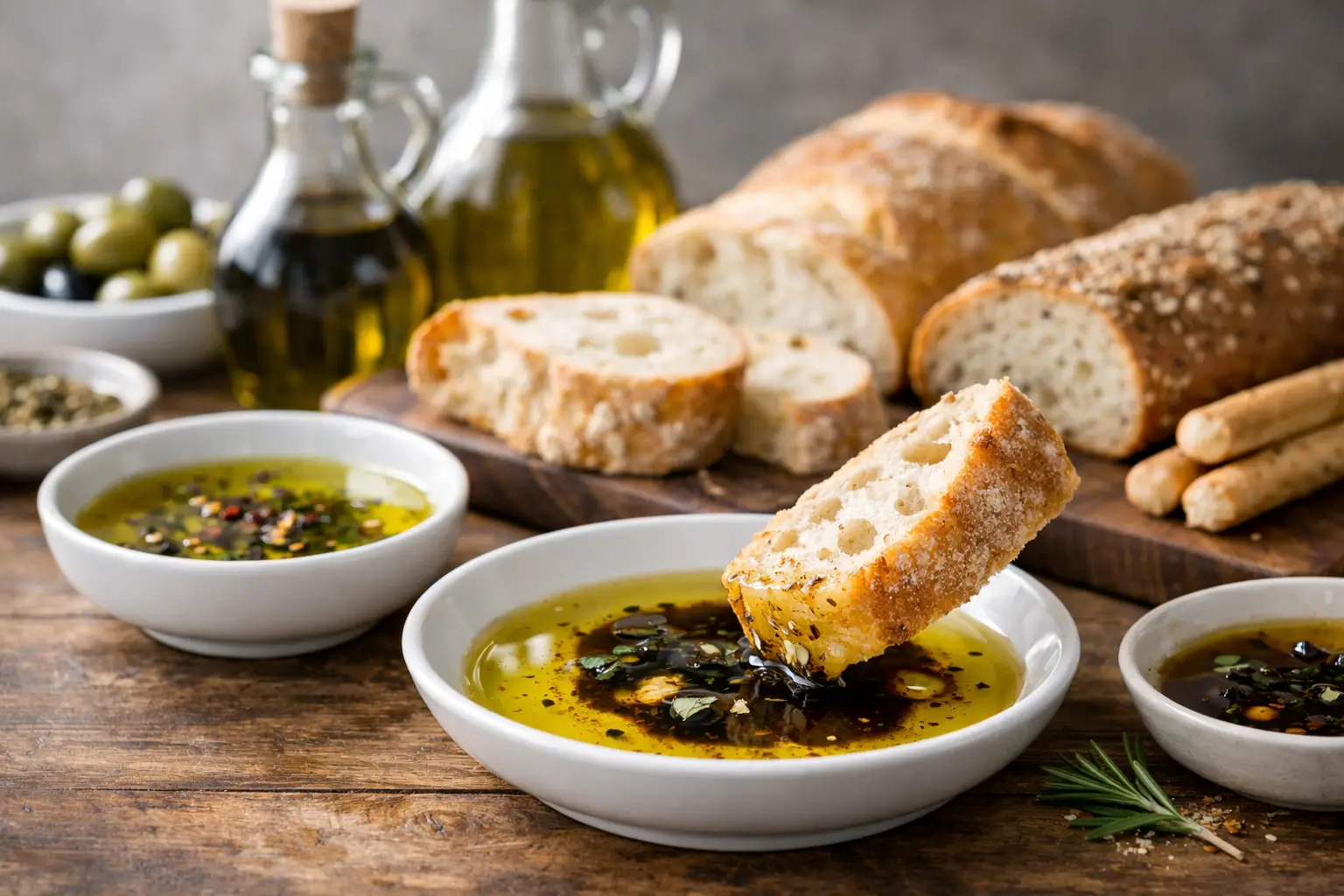
A warm loaf, a shallow dish and a really good oil can make the simplest starter feel quietly luxurious. If you are choosing the best oils for dipping bread, the difference comes down to flavour, freshness and what you want the bread to do – soak up richness, sharpen herbs, or let a peppery finish linger.
Bread dipping sounds straightforward, but not every oil performs in the same way. Some are grassy and assertive, some are round and buttery, and some bring garlic, basil or chilli into the mix from the start. The right choice depends on the bread in front of you, the occasion, and whether you want a classic restaurant-style serve or something a little more characterful at home.
What makes an oil good for dipping?
For dipping, texture matters almost as much as flavour. An oil with body will cling slightly to the bread and carry seasoning well, while a very neutral or thin oil can taste flat. Freshness is equally important. Good oil should smell lively and inviting, not tired or greasy.
Balance is what separates a pleasant dip from a memorable one. A peppery finish can be brilliant with soft focaccia, but it may overpower a delicate white sourdough if you add too much salt and vinegar alongside it. Likewise, a very mild oil can seem elegant with a crusty baguette, yet disappear completely next to roasted garlic or a heavily herbed seasoning blend.
The best oils for dipping bread by flavour style
Extra virgin olive oil
If there is one benchmark for bread dipping, it is extra virgin olive oil. It offers fruitiness, gentle bitterness and that familiar peppery finish that gives the whole plate structure. When people picture a dish of oil beside torn bread, this is usually what they are imagining.
The best extra virgin olive oils for dipping are fresh, fragrant and expressive enough to stand on their own. You might notice notes of cut grass, green tomato, almond or artichoke depending on the olive variety. With a pinch of sea salt, that complexity becomes even more noticeable. This is the oil to choose when you want something classic, confident and versatile.
Mild and buttery olive oil
Not everyone wants a bold peppery hit. A softer, buttery olive oil is ideal if you prefer a more rounded style or if you are serving bread before a lighter meal. These oils often show almond, ripe olive or soft fruit notes rather than bitterness.
They work especially well with ciabatta, focaccia and breads with a tender crumb. Add flaky salt and perhaps a little cracked black pepper, and you have something elegant without trying too hard. For guests who claim they do not usually notice olive oil, this style often changes their mind.
Garlic-infused oil
Garlic-infused oil has obvious appeal for dipping, but the quality of the infusion makes all the difference. The best versions taste savoury and aromatic, not harsh or synthetic. You want the garlic to feel woven into the oil rather than sitting on top of it.
This is a natural partner for rustic breads and sharing platters. It can carry a simple dip with very little else added, though it is worth holding back on raw garlic or strong dried herbs if the infusion is already full-flavoured. Too many additions can muddy what should be a clean, savoury profile.
Basil-infused oil
Basil oil brings a greener, more summery character to the table. It suits lighter starters and has a freshness that feels especially good with warm white bread, tomato dishes or antipasti. The flavour should be lifted and herbal, not overly sweet.
If you are serving bread before a Mediterranean-style meal, basil-infused oil is an easy way to make the first course feel more considered. A little sea salt is usually enough. Add balsamic only if you want a sweeter edge, because too much can overwhelm the herbal notes.
Chilli oil
For people who like a little heat, chilli oil is one of the best oils for dipping bread when used with restraint. The aim is warmth and depth, not a mouth-numbing challenge before dinner. Good chilli oil should still let the base oil come through.
This works beautifully with airy focaccia or grilled flatbreads, especially if there are olives, cured meats or roasted vegetables on the table. It is best treated as a more deliberate flavour choice rather than the default. A fiery oil can be irresistible, but it tends to dominate, so it suits relaxed sharing boards better than every occasion.
Lemon-infused olive oil
Lemon-infused oil gives bread dipping a brighter, cleaner feel. It is particularly good in warmer months or whenever you want an appetiser that feels fresh rather than rich. The citrus should taste natural and fragrant, with enough olive character underneath to keep it grounded.
Try it with focaccia, rosemary bread or slices of toasted sourdough. It can also be lovely with a few thyme leaves or a light sprinkle of sea salt. If the meal ahead includes fish, grilled vegetables or salads, lemon oil sets the tone very well.
Truffle oil
Truffle oil is divisive, and rightly so. Used sparingly, it can feel indulgent and restaurant-like. Used carelessly, it can swamp everything else on the plate. For dipping bread, it is best as an occasional luxury rather than an everyday staple.
Serve it with simple bread and very little seasoning so the aroma stays refined. If you are offering several oils, truffle should be one option among others, not the only one. It appeals to guests who enjoy rich, earthy flavours, but it is not the most universally liked choice.
How bread changes the oil
The bread itself is half the pairing. A peppery extra virgin can shine with fluffy focaccia because the soft crumb catches the oil beautifully. A chewy sourdough, on the other hand, can handle deeper bitterness and stronger seasoning. Baguette tends to suit cleaner, more streamlined oils because its crisp crust and lighter interior do not need as much help.
Seeded or wholemeal loaves bring their own nuttiness, which can be lovely with mild oils but less successful with heavily infused ones. If the bread already contains rosemary, olives or onion, keep the oil simpler. Too many competing flavours can make the dip feel cluttered.
What to add – and what not to
There is no rule that dipping oil must be plain, but additions should support the oil rather than disguise it. A pinch of flaky sea salt often does more than a whole spoonful of dried seasoning. Freshly cracked black pepper can add gentle warmth, while dried herbs work best when used lightly.
Balsamic is popular, but it changes the experience completely. A little can add sweetness and acidity, though it also masks subtle olive notes. If you have chosen a particularly fine extra virgin oil, try tasting it first with just bread and salt. You may find it needs nothing else.
For a more generous antipasti style serve, herbs, chilli flakes or a small spoonful of dukkah can all work well. The trade-off is that the oil becomes more of a prepared dip than a pure tasting experience. Neither is wrong – it simply depends on the moment.
How to serve dipping oil well
Temperature matters more than many people realise. Olive oil served too cold loses some aroma and can seem dull. Room temperature is usually best, especially if you want the fruitiness and peppery notes to come through clearly.
Use a shallow dish rather than a deep bowl so the aroma is easier to catch and the bread picks up the right amount. Add seasoning at the last minute. If herbs sit in the oil for too long, they can become soggy and mute the overall flavour.
If you are entertaining, offering two contrasting oils often works better than setting out a whole line-up. One classic extra virgin and one infused option gives guests choice without overcomplicating the table. It is a simple way to make bread service feel generous and thoughtful.
Choosing a premium oil worth serving on its own
A dipping oil has nowhere to hide, so quality is especially noticeable. This is where specialist sourcing really matters. A well-made oil should taste distinct and fresh enough to hold attention with nothing more than a torn piece of bread and a little sea salt.
That is why many home cooks gradually move beyond supermarket basics when they start serving oil as part of the meal, not just as an ingredient in cooking. At Oil & Vinegar, the pleasure comes from that small but meaningful upgrade – choosing flavours with enough character to turn a loaf of bread into part of the occasion.
The best dipping oil is not always the boldest or the most expensive. It is the one that suits the bread, the mood and the food around it. Start with an excellent extra virgin olive oil, then branch into garlic, basil, chilli or lemon when you want a different accent. A good loaf will do the rest.