
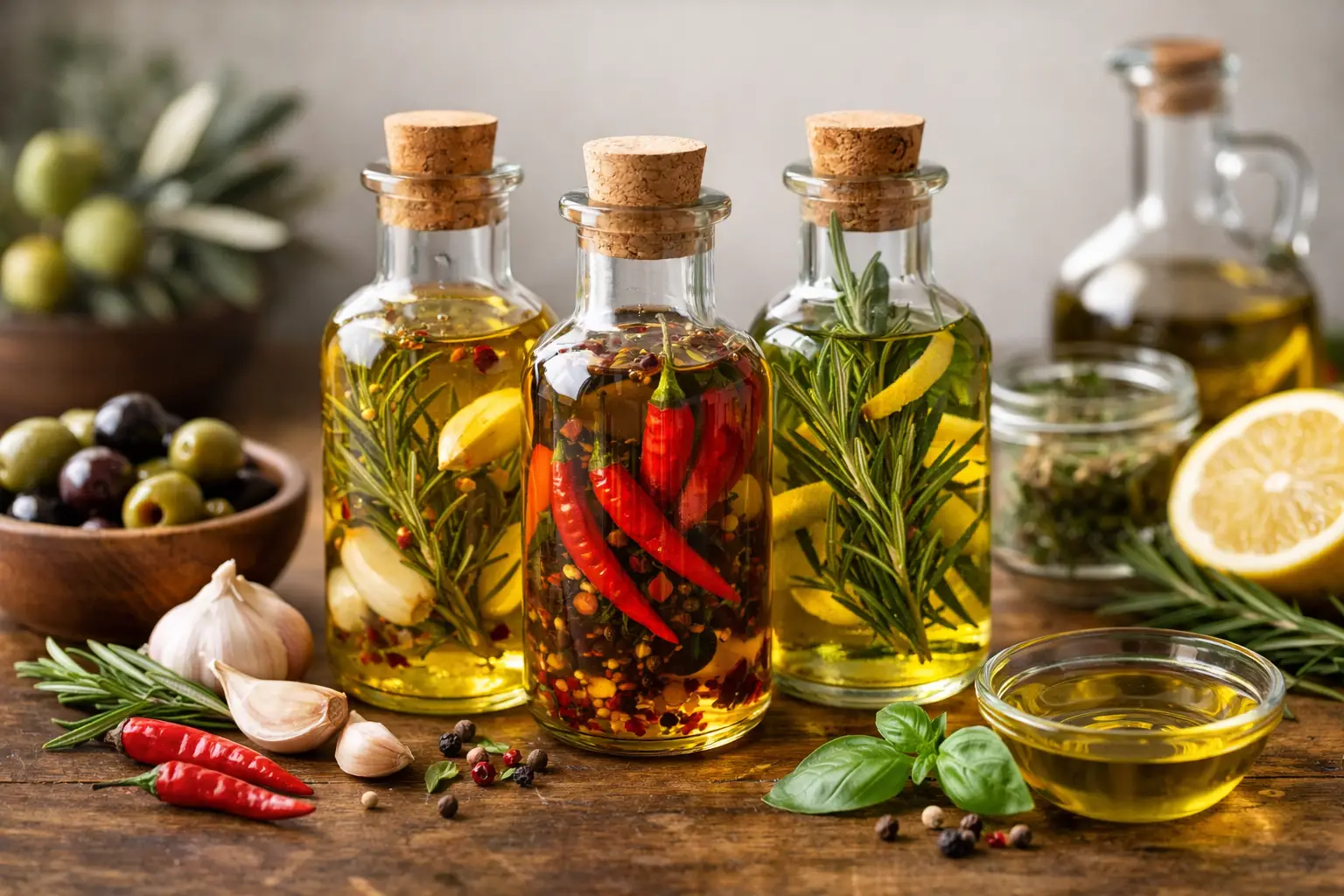
A good infused olive oil can change the direction of a dish in seconds. A bowl of soup becomes more rounded with a swirl of basil oil. Roast potatoes take on a warmer, deeper character with garlic. A simple tomato salad feels far more considered with a peppery chilli finish. This guide to infused olive oils is here to help you choose with confidence, use them well, and enjoy the small luxury of better flavour every day.
For many home cooks, infused olive oils sit in that useful space between ingredient and finishing touch. They do some of the work for you, bringing aroma, depth and balance without needing a long list of extras. That makes them particularly appealing when you want to cook well, eat well and still keep things uncomplicated.
What infused olive oils actually add
At their best, infused olive oils do more than make food taste of garlic, lemon or herbs. They carry flavour in a softer, more integrated way than many dried seasonings or sauces. Because olive oil coats the palate, the flavour feels rounded rather than sharp, and that gives dishes a more polished finish.
There is also a practical advantage. If you are preparing a quick midweek supper, an infused oil can help you build flavour quickly without chopping fresh herbs, zesting citrus or balancing extra spices. For entertaining, they are equally useful. A loaf of bread, a dish of olives and a well-chosen infused oil can feel generous and refined with very little effort.
That said, not every oil suits every use. Some are at their best when heated gently, while others truly shine as a final flourish. The difference matters.
A guide to infused olive oils by flavour family
Choosing by flavour family is often easier than choosing by dish. Once you understand the character of an oil, you can start pairing it more naturally across your cooking.
Garlic infused olive oil
Garlic oil is one of the most versatile bottles in the cupboard. It adds savoury depth without the harshness raw garlic can sometimes bring, especially in dressings or drizzles. It works beautifully with roasted vegetables, mashed potatoes, grilled chicken and mushroom dishes. Stir it through pasta with a little parsley and Parmesan, and supper is nearly sorted.
If you enjoy confident, warming flavours, garlic is often the safest place to start. It tends to feel familiar, but still noticeably more refined than reaching for a basic cooking oil.
Chilli infused olive oil
Chilli oil brings warmth, not just heat. A good one should have character and balance, with enough richness from the olive oil to stop the spice feeling one-dimensional. Use it over pizza, soups, grilled prawns or roasted cauliflower. It also lifts eggs very well, especially fried or softly scrambled.
The trade-off is that chilli can dominate delicate ingredients. If you are dressing burrata, poached fish or a mild salad, use it with a light hand or choose something gentler.
Lemon infused olive oil
Lemon oil is bright, elegant and especially useful when you want freshness without extra acidity. It suits fish, chicken, courgettes, asparagus and grain salads beautifully. It is also excellent in baking, particularly in olive oil cakes where you want citrus fragrance without too much sharpness.
This is the bottle to reach for when a dish feels heavy and needs lightening. It is often more subtle than squeezing over fresh lemon juice, which makes it ideal where texture matters.
Herb infused olive oils
Basil, rosemary, thyme and oregano oils all bring a different mood. Basil feels fresh and Mediterranean, lovely with tomatoes, mozzarella and simple pasta. Rosemary is more resinous and assertive, well suited to roast lamb, potatoes and focaccia. Oregano has a robust, savoury quality that works especially well with grilled vegetables and tomato-led dishes.
Herb oils tend to reward restraint. They can be glorious when used with purpose, but too many strong herbal notes in one dish can make flavours muddled rather than layered.
Truffle and other rich infused oils
Some infused oils are designed less for everyday cooking and more for indulgent finishing. Truffle is the obvious example. Used sparingly, it can transform risotto, chips, scrambled eggs or a mushroom tart. Used too freely, it overwhelms almost everything else on the plate.
That is often the rule with richer infused oils. A few drops can be memorable. A heavy pour can flatten a dish.
How to choose the right infused olive oil
The best bottle for you depends on how you actually cook. If you love easy suppers and traybakes, garlic, chilli and rosemary are hard-working choices. If you often prepare fish, salads or lighter lunches, lemon and basil may see more use. If you enjoy entertaining, a small collection gives you flexibility, especially when serving bread, antipasti or grazing boards.
Quality matters here. A well-made infused oil should still taste like good olive oil first, with the added flavour woven through rather than sitting awkwardly on top. If the base oil is poor, no amount of flavouring will disguise it for long.
It is also worth considering intensity. Some people want a punchy chilli oil that announces itself immediately. Others prefer a gentler bottle that can be used more freely. Neither is wrong. It simply depends on whether you want the oil to lead or support.
Cooking with infused olive oils
One of the most common questions in any guide to infused olive oils is whether they are for cooking or finishing. The answer is both, but not always in the same way.
Gentle cooking usually works well. Garlic oil for sautéing vegetables, lemon oil for warm couscous, or herb oil brushed over chicken before roasting can all be very effective. Heat helps distribute flavour and gives the dish a more integrated result.
High heat is more complicated. Very delicate infused oils can lose some of their nuance if pushed too far, and subtle citrus or herb notes may fade in a fiercely hot pan. If the flavour is precious, save at least some of the oil for finishing after cooking. That way you get depth from the cooking process and freshness from the final drizzle.
This is especially true with premium oils. If you have chosen a beautiful bottle for its aroma, let that aroma be noticed.
Pairing ideas that rarely fail
Infused olive oils are at their best when they support an ingredient rather than compete with it. Garlic oil with potatoes is such a dependable pairing because both have warmth and savoury comfort. Lemon with white fish works because the brightness sharpens the natural sweetness. Basil with tomatoes feels obvious for good reason – it simply works.
A few combinations are particularly useful to keep in mind. Chilli oil with pizza or roasted vegetables adds energy and contrast. Rosemary oil with focaccia, roast lamb or root vegetables brings a more autumnal depth. Garlic with mushrooms, beans or pasta gives savouriness without needing much else. Truffle with eggs or chips creates instant restaurant-style richness.
For gifting, these familiar pairings matter too. An infused oil feels easier to buy for someone else when its use is immediately clear. Lemon for seafood lovers, chilli for keen cooks, garlic for everyday versatility – these are confident choices that feel thoughtful rather than risky.
Storage and freshness
Infused olive oils deserve the same care as any good olive oil. Keep them away from direct light and heat, and make sure the cap is closed properly after use. A cool cupboard is far better than a sunny spot beside the hob.
Freshness affects flavour more than many people realise. Over time, the bright notes in citrus and herbs soften, and the oil can lose its sparkle. That does not mean you need to use a bottle in a rush, but it does mean these are ingredients to enjoy rather than save indefinitely for a special occasion.
If you cook regularly, a smaller bottle can be the smarter choice, especially with more distinctive flavours. It keeps the experience fresher and gives you a reason to try something new next time.
When infused olive oils make the biggest difference
There are some moments when infused oils earn their place more clearly than others. They are particularly good for simple food, where every ingredient is noticeable. Bread, grilled meat, roasted vegetables, burrata, soups and plain pasta all benefit because there is space for the oil to be tasted properly.
They also come into their own when you want to elevate a meal without adding complexity. A good bottle on the table invites people to finish dishes to their own taste, which feels both relaxed and generous. That is part of the pleasure. Premium ingredients should make cooking more enjoyable, not more intimidating.
At Oil & Vinegar, that sense of flavour discovery sits at the heart of why infused oils are so appealing. They help everyday cooks create something that tastes more considered, while still leaving room for instinct and personal style.
The best way to begin is not with a dozen bottles, but with one or two flavours you know you will reach for. Use them often, notice what they bring to the plate, and let your cupboard grow from there. Good infused olive oil has a way of making experimentation feel easy, and that is usually where the most enjoyable cooking starts.