
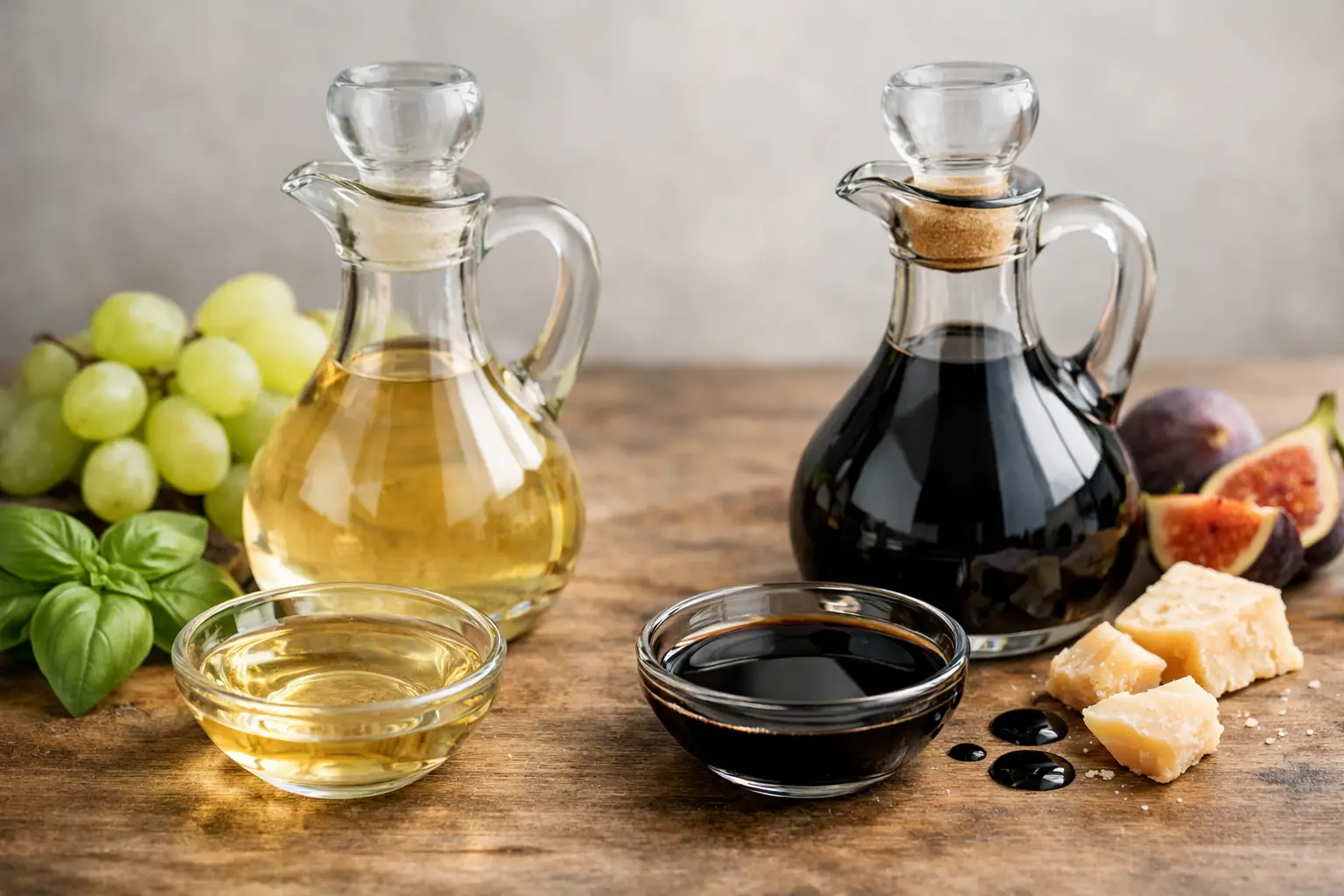
You can spot the difference before the bottle is even open. One is pale, glossy and delicate-looking. The other is deep brown, richer in appearance and more familiar on the dinner table. But white balsamic vs dark balsamic is not simply a matter of colour. Each brings a distinct character to cooking, and choosing well can make the difference between a dressing that lifts a dish and one that dominates it.
For home cooks who enjoy building flavour with care, it helps to think of these two balsamics as separate tools rather than substitutes. Both begin with grape must and wine vinegar, but the way they are cooked, aged and presented creates very different results in the kitchen.
White balsamic vs dark balsamic: what sets them apart?
Dark balsamic is the style most people know best. It is made from grape must that is cooked for longer, which deepens both its colour and its flavour. Depending on the producer and the level of ageing, it can be mellow, syrupy, sweet-sharp and full of woody, fruity complexity.
White balsamic is made in a way that keeps the final vinegar much lighter in colour. The grape must is generally cooked at a lower temperature or processed more gently to avoid the caramelisation that gives dark balsamic its deep brown hue. The result is cleaner-looking, brighter and often a touch lighter on the palate, while still offering the sweet acidity that makes balsamic so versatile.
That difference matters more than many recipes suggest. Dark balsamic brings depth and visual richness. White balsamic offers balance without changing the appearance of a dish too dramatically. If you are dressing a peach salad, finishing grilled chicken or sharpening a summer slaw, the colour alone can influence your choice.
Flavour profile: subtle brightness or richer sweetness?
White balsamic tends to taste fresher and more delicate. You still get sweetness, but it is usually less rounded and less treacly than a dark balsamic. There is often a gentle fruitiness and a cleaner acidic finish, which makes it especially useful when you want a dressing or glaze to taste polished without feeling heavy.
Dark balsamic, by contrast, leans further into richness. It can have notes of dried fruit, fig, molasses, wood and even a soft raisin-like warmth, particularly if it has been aged well. That complexity is part of its appeal, but it does mean it takes up more space in a dish.
Neither is better in absolute terms. It depends on what else is on the plate. If your ingredients are mild or visually delicate, white balsamic often gives you more control. If your dish needs depth, sweetness and a fuller finish, dark balsamic usually earns its place.
How acidity feels in each style
This is where the choice becomes especially practical. White balsamic often feels crisper, even when the actual acidity is similar, because its flavour is lighter and less caramelised. It cuts through creamy textures beautifully and works well with herbs, citrus and younger cheeses.
Dark balsamic can seem softer because the sweetness and ageing smooth out the sharper edges. That makes it very easy to use in reductions, marinades and glazes, where you want body as well as tang.
When to use white balsamic
White balsamic is often the better option when presentation matters as much as flavour. It enhances without staining. That alone makes it a favourite for lighter dishes, especially in spring and summer cooking.
It works particularly well in vinaigrettes for green salads, fennel, cucumber, courgette ribbons and grain bowls with fresh herbs. It is also excellent with fish, shellfish and chicken, where a darker balsamic might look muddy or overwhelm the more delicate flavours. Stir it into potato salad, drizzle it over burrata, or use it to brighten a fruit salad with strawberries, melon or stone fruit.
Because the flavour is elegant rather than forceful, white balsamic is also useful in entertaining. It helps dishes look refined while still offering that rounded sweet-sour finish people love. If you enjoy ingredients that feel fresh, polished and versatile, it deserves a place alongside your everyday olive oil.
Pairings that suit white balsamic best
Think clean, green and lightly sweet. White balsamic pairs beautifully with extra virgin olive oil, basil, dill, mint, lemon zest, goat’s cheese and soft summer vegetables. It also sits comfortably with fruit-forward flavours such as pear, peach and raspberry.
In practical terms, it is often the balsamic to reach for when you want balance rather than drama.
When dark balsamic makes more sense
Dark balsamic comes into its own with bolder ingredients and colder-weather cooking, although it is by no means limited to those occasions. It gives tomato salads more depth, roasted vegetables more sweetness and grilled meats a more rounded finish. It can stand up to beef, lamb, mushrooms, mature cheese and anything with caramelised edges.
It is also the obvious choice for reductions. As it cooks down, its sweetness intensifies and the texture becomes glossy and concentrated. That makes it ideal for drizzling over roast beetroot, steak, Parmigiano Reggiano or even strawberries if you want a more dramatic contrast.
There is also a familiar comfort to dark balsamic. For many people, it is the pantry staple they instinctively trust, and for good reason. A good one can move from salad dressing to marinade to finishing drizzle without much effort.
Which is better for salads, marinades and cooking?
This is where white balsamic vs dark balsamic becomes a question of purpose.
For salads, white balsamic is often the better fit when the ingredients are crisp, pale or subtle in flavour. It keeps lettuces vibrant, complements herbs and allows ingredients such as avocado, mozzarella or cucumber to remain visually fresh. Dark balsamic suits more assertive salads – think tomato, roasted pepper, lentil, beetroot or those built around nuts and hard cheese.
For marinades, dark balsamic usually has the edge because it brings more sweetness and body. That helps with caramelisation when roasting or grilling. White balsamic can still be excellent in marinades, particularly for chicken, pork or prawns where you want brightness without too much colour.
For cooking, the answer depends on whether the vinegar is meant to stand out or disappear into the dish. White balsamic is very useful in pan sauces, vegetable dishes and lighter reductions. Dark balsamic is better when you want richness, shine and a more pronounced balsamic note.
A note on sweetness
People often assume dark balsamic is always much sweeter. Often it is, or at least it tastes that way, but quality and style matter. A well-made white balsamic can still have notable sweetness, just expressed in a lighter, less syrupy way. If you prefer a gentler balance, white balsamic may surprise you.
Do you need both in the cupboard?
If you cook often and enjoy experimenting, yes – having both is genuinely useful. They are not duplicates. White balsamic gives you flexibility with lighter dishes and elegant dressings. Dark balsamic covers richer cooking, stronger pairings and the unmistakable depth many classic recipes rely on.
If you are only choosing one, start with how you cook most. If your meals lean towards salads, fish, chicken, fresh cheeses and seasonal vegetables, white balsamic may prove more versatile than expected. If you love roasting, glazing, tomato-based dishes and hearty salads, dark balsamic is probably the more natural first choice.
There is also the question of style at the table. A bottle of dark balsamic often feels warm, traditional and indulgent. White balsamic feels bright, contemporary and quietly refined. Both offer pleasure, but in slightly different moods.
How to choose a good bottle
Look for balance. Whether white or dark, a good balsamic should taste rounded rather than simply sharp. Sweetness, acidity and aroma should feel integrated. If one note dominates too aggressively, it will be harder to use across different dishes.
Texture also matters. Dark balsamic may have more viscosity, especially if aged, but it should not feel cloying. White balsamic should feel lively and smooth, not thin or harsh. A quality bottle invites you to taste again.
At Oil & Vinegar, this is exactly where specialist guidance makes a difference. Once you understand the style you prefer, choosing becomes much less about labels and much more about how you want to cook, serve and enjoy your food.
The nicest way to think about it is this: white balsamic brings light and lift, while dark balsamic brings depth and warmth. Keep the one that suits your cooking, or better still, keep both and let the dish decide.